
The Evolution of the Initiative
From an Easter Breakfast in Kochi to a Global Celebration of Hope
A Humble Beginning – Kochi, 2014
The journey of Easter – The Global Festival of All Christians began in 2014 at Chavara Cultural Centre, Kochi, Kerala, under the leadership of Rev. Dr. Roby Kannamchirayil CMI, with the guidance and encouragement of Rev. Fr. Paul Achandy CMI, the then Prior General of the Carmelites of Mary Immaculate (CMI).
What began as a simple Easter Breakfast was inspired by a profound conviction: the joy of the Resurrection of Jesus Christ should be shared beyond the boundaries of churches and Christian communities.
The gathering brought together people from different religious and cultural backgrounds to share in the spirit of Easter through friendship, dialogue, and fellowship. It offered an opportunity to experience Easter not only as a religious observance but also as a celebration of hope, reconciliation, and human fraternity.
Over the following years, the initiative continued at Chavara Cultural Centre, Kochi, gradually developing into a meaningful platform for interreligious encounter and shared celebration.
From Kochi to the National Capital – New Delhi
With the establishment and development of Chavara Cultural Centre in New Delhi, Rev. Dr. Roby Kannamchirayil CMI carried this vision to the capital of India.
The initiative began in Delhi in the form of an Easter Brunch, bringing together representatives of different religions, Christian leaders, diplomats, intellectuals, and members of civil society.
One of the significant early gatherings was organised at Western Court, Connaught Place, New Delhi, providing a welcoming space for people from diverse backgrounds to share the joy of Easter.
What began as a gathering around a shared meal gradually evolved into a larger Inter-Religious and Ecumenical Easter Celebration, reflecting the belief that religious festivals can become meaningful opportunities for dialogue, mutual understanding, and peaceful coexistence.
From Fellowship to a Celebration of Faith and Culture
As the initiative grew, Easter celebrations in New Delhi developed into vibrant gatherings of faith, culture, and human fraternity.
A defining feature of the celebration has been the participation of representatives of nine religious traditions, coming together to share in the joy of the Resurrection of Jesus Christ and affirm their common commitment to peace, friendship, and mutual respect.
Christian leaders from different denominations, ambassadors, high commissioners, religious leaders, and distinguished guests have joined these celebrations, demonstrating how a Christian festival can become an occasion for meaningful interreligious encounter.
Music, dance, cultural performances, Easter messages, and shared fellowship have gradually become integral elements of the celebrations.
The participation of students from schools and colleges, youth organisations, choirs, artists, and cultural groups has further transformed the initiative into a joyful festival of music, creativity, faith, and togetherness.
Today, Easter is celebrated not merely through speeches and formal gatherings but through the living expressions of young people who proclaim the joy of the Resurrection through music, dance, art, theatre, and cultural performances.
These celebrations reflect a simple yet powerful conviction:
“Peace Begins When We Start Celebrating Others.”
Towards a Global Movement
From a humble Easter Breakfast in Kochi to interreligious celebrations in the national capital, the initiative has continued to grow in vision, participation, and international engagement.
The involvement of ambassadors, religious leaders, Christian institutions, youth movements, and representatives of diverse cultures has inspired a broader vision: to promote Easter as the Global Festival of All Christians.
As Christianity approaches the Great Jubilee of 2033, commemorating two thousand years of the Death and Resurrection of Jesus Christ, this initiative seeks to encourage Christian communities across the world to celebrate Easter together and share its message of hope, peace, and new life with the wider human family.
The movement envisions Easter being celebrated at national, regional, diocesan, parish, institutional, educational, and family levels, with the participation of people of different religions and cultures.
What began around a breakfast table has grown into a vision of bringing the world together through the joy of Easter.
ABOUT THE INITIATING ORGANISATION
Our Founder
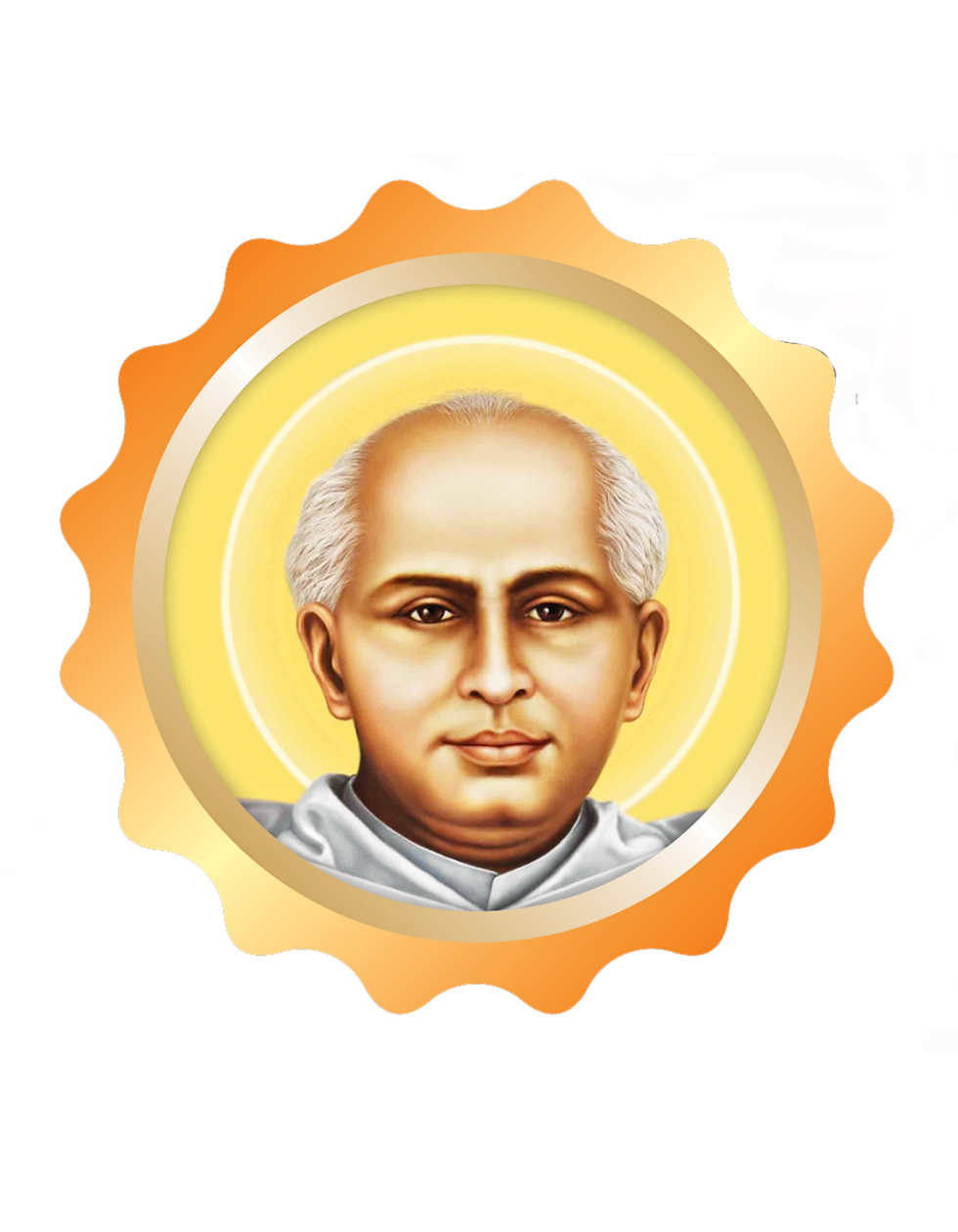
St. Kuriakose Elias Chavara (1805–1871)
St. Kuriakose Elias Chavara was a visionary spiritual leader, social reformer, educator, and pioneer of cultural transformation in nineteenth-century Kerala, India.
He was instrumental in founding two indigenous Catholic religious congregations: the Carmelites of Mary Immaculate (CMI) and the Congregation of the Mother of Carmel (CMC).
A strong advocate of universal education, St. Chavara recognised education as a powerful instrument for human dignity, social equality, and community development.
In 1846, he established a Sanskrit school at Mannanam, opening opportunities for children from different social backgrounds to receive education at a time when such access was severely restricted.
His life and mission challenged social divisions and promoted a vision of society rooted in compassion, equality, mutual respect, and the dignity of every human person.
St. Chavara believed that faith should inspire meaningful service to humanity and that education, spiritual formation, and social responsibility must contribute to the common good.
His legacy continues to inspire the CMI Congregation and its institutions to build bridges between communities and promote a culture of peace and fraternity.
The vision of Easter as a global celebration of hope and unity is deeply inspired by this enduring commitment to faith, education, dialogue, and human dignity.
ABOUT THE CARMELITES OF MARY IMMACULATE (CMI)
A Legacy of Faith, Education, and Social Transformation
The Carmelites of Mary Immaculate (CMI) is the first indigenous Catholic religious congregation for men in India, founded in 1831.
Rooted in the spiritual vision of St. Kuriakose Elias Chavara and his fellow founders, the Congregation is dedicated to spiritual renewal, education, pastoral ministry, social development, and service to humanity.
Through its educational institutions, social ministries, cultural centres, and pastoral initiatives, the CMI Congregation continues to contribute to the intellectual, moral, spiritual, and social development of communities in India and across the world.
The Congregation's commitment to education, dialogue, social harmony, and human dignity reflects the enduring vision of its founder.
The global Easter initiative draws inspiration from this rich spiritual and cultural heritage, encouraging Christian communities to become witnesses of faith, hope, fraternity, and peace.
Its activities reflect the conviction that lasting peace is nurtured through mutual respect, meaningful relationships, cultural understanding, and the willingness to celebrate one another.
The Centre has initiated and organised several programmes promoting interreligious harmony, ecumenical collaboration, cultural exchange, youth engagement, and international dialogue.
Among its significant initiatives is Easter – The Global Festival of All Christians, which seeks to transform the celebration of Easter into a worldwide expression of Christian unity, hope, reconciliation, and human fraternity.
Website: www.chavaradelhi.com
ABOUT THE CATHOLIC BISHOPS' CONFERENCE OF INDIA (CBCI)
Serving the Church and Society
The Catholic Bishops' Conference of India (CBCI), established in September 1944, is the national assembly of Catholic bishops in India.
Headquartered in New Delhi, the Conference provides a platform for bishops from the different Catholic traditions in India to deliberate collectively on matters concerning the Church, society, pastoral ministry, education, healthcare, social justice, and national development.
As a member of the Federation of Asian Bishops' Conferences, the CBCI contributes to regional and international cooperation while addressing issues of national importance.
Through its various commissions and initiatives, the Conference promotes the values of the Gospel, human dignity, religious freedom, justice, solidarity, and the common good.
The CBCI has played a significant role in encouraging interreligious dialogue, ecumenical cooperation, and peaceful coexistence among India's diverse religious communities.
The vision of celebrating Easter as the Faith Festival of all Christians, while welcoming the participation of people of other religions, reflects the broader commitment to Christian unity, dialogue, and fraternity.
The Inter-Religious and Ecumenical Easter Celebration initiative has received appreciation and encouragement from the Catholic Bishops' Conference of India, strengthening its vision of sharing the message of Easter with the wider human family.

International Engagement and Contributions
Fr. Roby has organised six World Assemblies of Religions in different parts of the world and has participated in numerous international conferences, seminars, and interreligious gatherings.
He has presented academic papers and delivered lectures on interreligious dialogue, peace, and social harmony at international forums and institutions in the United Kingdom, United States, Austria, Qatar, Sri Lanka, United Arab Emirates, Germany, Thailand, and Rome.
His international engagements have included academic programmes and conferences associated with Oxford, Birmingham, George Washington University in Washington, D.C., and other institutions.
He was among the special invitees at the Parliament of the World's Religions in Chicago in 2023.
In April 2025, he was invited to address the Global Justice, Love & Peace Summit in Dubai, further contributing to international conversations on peace and human fraternity.
From 22 to 25 June 2026, he participated in Acton University 2026 in Grand Rapids, Michigan, USA, under the theme Building the Foundations of Freedom and Exploring the Intersection of Faith.
Alongside his international engagements, Fr. Roby regularly conducts workshops, seminars, lectures, and interactive programmes for educators, priests, religious communities, students, and young people, encouraging them to become active contributors to peace and social harmony.
Awards and Recognition
Fr. Roby's contributions to interreligious dialogue and peacebuilding have received recognition through several national and international honours.
These include:
-
Stallion International Award – 2011
-
URI Asia-Pacific Region Lifetime Achievement Award – 2018
-
Vishwa Shanti Padmam (Lotus of World Peace) – 2019, presented by the World Yoga Community in New York
-
Governor's Award of Excellence – December 2025, conferred by Dr. C. V. Ananda Bose, then Governor of West Bengal, in recognition of his contributions to peace, cultural dialogue, and social harmony
These recognitions reflect his longstanding commitment to building relationships across religious, cultural, and national boundaries.
Rev. Dr. Roby Kannamchirayil CMI
Director, Chavara Cultural Centre, New Delhi
Phone: +91 9447824575
Email: robykannan@gmail.com
Website: www.frrobykannanchiracmi.com
Chavara Cultural Centre: www.chavaradelhi.com

Chavara Cultural Centre, New Delhi
Chavara Cultural Centre, Delhi, is an initiative of the Carmelites of Mary Immaculate (CMI), a Catholic religious congregation, dedicated to promoting peace, harmony, and human fraternity through interreligious dialogue, art, literature, education, and cultural interactions.
The Centre is an extension of Chavara Cultural Centre, Kochi, Kerala, which was established in 1971 to commemorate the centenary of the heavenly birth of St. Kuriakose Elias Chavara, the first canonised male Catholic saint of India.
Inspired by the vision and legacy of St. Chavara, the Centre seeks to create meaningful opportunities for people of different religions, cultures, and communities to encounter one another through dialogue, artistic expression, intellectual engagement, and shared celebrations.
Located in the national capital of India, Chavara Cultural Centre, Delhi, serves as a platform for building bridges between religious communities, diplomatic missions, educational institutions, cultural organisations, and civil society.
OUR DIRECTOR
Rev. Dr. Roby Kannamchirayil CMI
Rev. Dr. Roby Kannamchirayil CMI is a Catholic priest of the Syro-Malabar Church and a member of the Carmelites of Mary Immaculate (CMI). He is widely engaged in the fields of interreligious dialogue, ecumenism, education, cultural diplomacy, art, music, and international peacebuilding.
As the Director of Chavara Cultural Centre, New Delhi, he has been actively promoting peace and harmony through dialogue, cultural interactions, artistic initiatives, and international collaboration.
With more than 27 years of experience in interreligious engagement, Fr. Roby has contributed significantly to strengthening relationships among religious communities and promoting a culture of mutual respect and peaceful coexistence.
From 2011 to 2017, he served as the Secretary to the Dialogue and Ecumenism Commission of the Kerala Catholic Bishops' Council (KCBC).
Since 2014, he has served as the Secretary-General of the World Fellowship of Inter-Religious Councils (WFIRC), contributing to international cooperation among religious leaders and organisations.
He also serves as an NGO Representative at the United Nations, participating in global conversations concerning peace, dialogue, human fraternity, and social responsibility.


FROM KOCHI TO THE WORLD
A Journey of Faith, Friendship and Hope
What began in 2014 as a simple Easter Breakfast in Kochi has evolved into a growing international vision.
From shared meals to interreligious gatherings, from the participation of religious leaders to the involvement of ambassadors and diplomats, and from formal celebrations to vibrant festivals of music, dance, and youth participation, the initiative continues to demonstrate the unifying power of Easter.
As the world approaches the Great Jubilee of Christianity in 2033, the invitation is extended to churches, Christian institutions, religious communities, educators, young people, and families across the globe.
“If we have a strong conviction in our own faith, why can’t we celebrate others?”